Part V: On-Course Mental Protocols, Diagnostics & Drills
Book Title: The Ground-First Golf Blueprint: Precision Setup Geometry, Progressive Offset & Dynamic Flow
Volume / Section: Part V — Mental Models, Diagnostics & Drills
Cross-References: book_index.md • part_2_11_step_core_routine.md • part_3_iron_grip_and_striking.md
Executive Overview: Transitioning from Practice to Competition
A golf swing is only as effective as the player's ability to reproduce it under competitive pressure. When tension rises, the brain defaults to analytical micro-management, causing deceleration, cognitive freezing, and compensatory flinches.
Part V establishes strict spatial and mental boundaries to isolate analytical thinking from instinctive athletic execution.
Chapter 13: The Think Box vs. Play Box Protocol
13.1 Spatial Demarcation on the Course
The golf course environment is divided into two distinct neurological zones separated by a physical boundary:
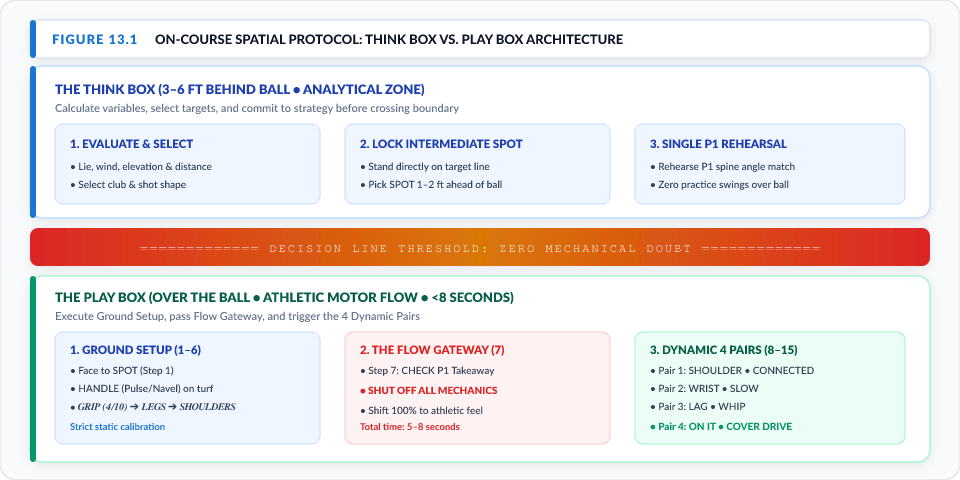
Figure 13.1: On-Course Spatial Protocol: Think Box vs. Play Box Architecture. View Vector SVG
13.2 The Strict 8-Second Trigger Rule
Cognitive studies show that maintaining static address over a golf ball for more than 5 seconds triggers cognitive overload and muscle tension.
- The Rule: From the instant your hands complete their grip in the Play Box to the initiation of the backswing, the elapsed time must be between 5 and 8 seconds.
- The Abort Protocol: If you find yourself frozen over the ball for more than 4 seconds with analytical thoughts racing, you must immediately step back across the Decision Line, exhale deeply, and reset the sequence.
13.3 The 3-Practice-Swing Pre-Shot Rehearsal Protocol (Inside the Think Box)
Before crossing the Decision Line, stand 2 paces behind the ball inside the Think Box and execute exactly three purposeful rehearsal swings:
- Swing 1 (Slow-Motion Direction & Corridor Extension): A deliberate, slow-motion rehearsal looking along the line, tracking the clubface and arms extending straight down the intended target corridor through the Cover Drive finish.
- Swing 2 (Turf Brush / Ground Calibration): A fluid, unhurried swing focusing on calibrating the bottom of the swing arc against the grass tips.
- Swing 3 (Motor Feel & Dynamic Rhythm): A full-rhythm rehearsal of the single designated motor feel for the shot (e.g., pushing lead shoulder down into trail heel, or 4/10 soft hands vertical gravity drop).
IMPORTANT:
The Play Box Firewall: Once you cross the Decision Line into the Play Box, zero practice swings are permitted. Sole the club, orient the handle, wrap your grip on the turf, calibrate stance, and trigger the swing within 5–8 seconds.
Chapter 14: Process-Based Shot Evaluation & Motor Scorecards
14.1 The 3-Point Process Scorecard
Judging a golf shot strictly by its outcome creates emotional volatility and destroys swing trust. A pure strike can bounce into a divot, and a terrible flinch can roll onto the green.
To build an unshakeable swing, grade every swing on a 3-Point Process Scorecard:
| # | Process Evaluation Question | Pass ($1\text{ pt}$) | Fail ($0\text{ pt}$) |
|---|---|---|---|
| 1 | Ground-First Handle & 4/10 Grip: Did I sole the club flush, preset the handle on turf, and maintain light 4/10 grip pressure? | $\square$ | $\square$ |
| 2 | Shoulder/Connected into Wrist/Slow: Did I initiate takeaway by pushing my lead shoulder down into my trail heel (staying connected) and feel the trail wrist set the tray at a slow apex? | $\square$ | $\square$ |
| 3 | Lag/Whip into Cover Drive: Did I let my hands drop soft into the slot (LAG), uncoil the whip (WHIP), and extend down the Cover Drive corridor? | $\square$ | $\square$ |
$$\mathbf{3\text{ YESES} = \text{FLAWLESS EXECUTION REGARDLESS OF OUTCOME}}$$
Chapter 15: Emergency Mid-Round Diagnostic Tree & Trouble Shots
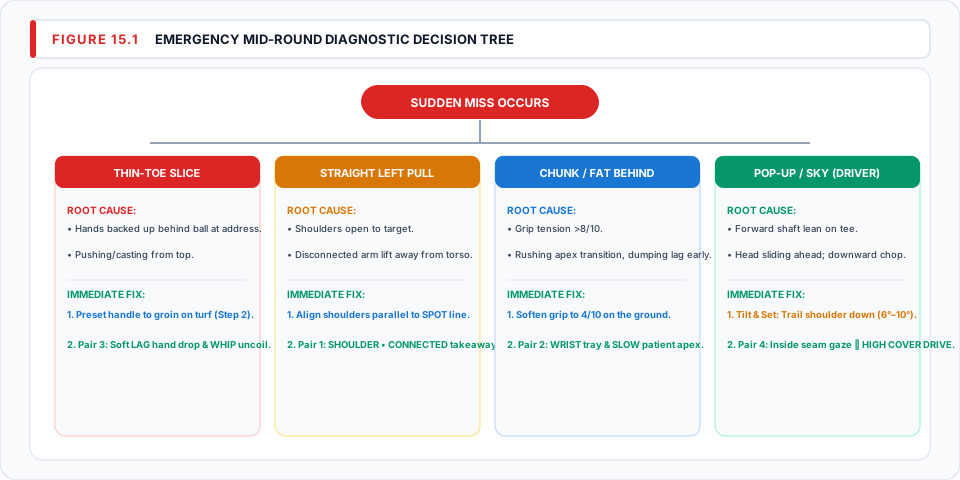
15.1 Emergency Mid-Round Swing Diagnostic Tree
When ball striking breaks down mid-round, consult this immediate diagnostic decision tree:
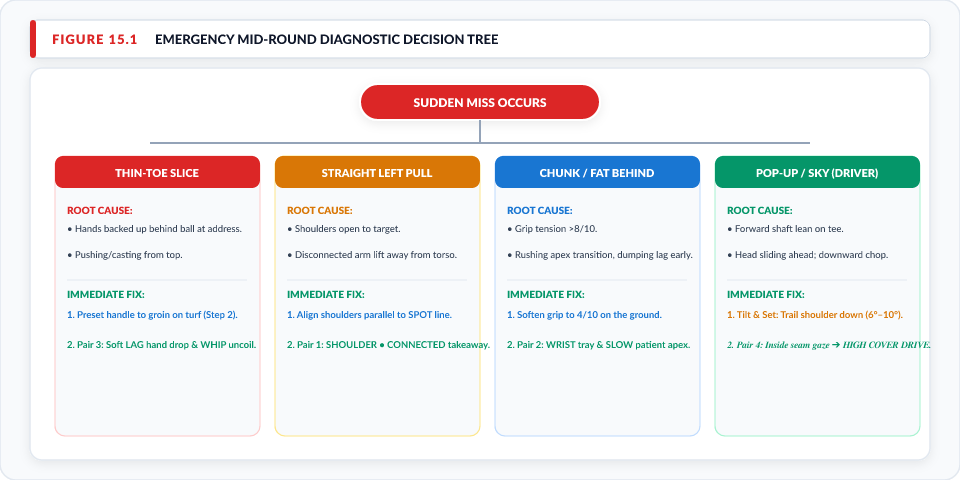
Figure 15.1: Emergency Mid-Round Diagnostic Decision Tree. View Vector SVG
15.2 Emergency Trouble Shot & Uneven Lie Adaptation
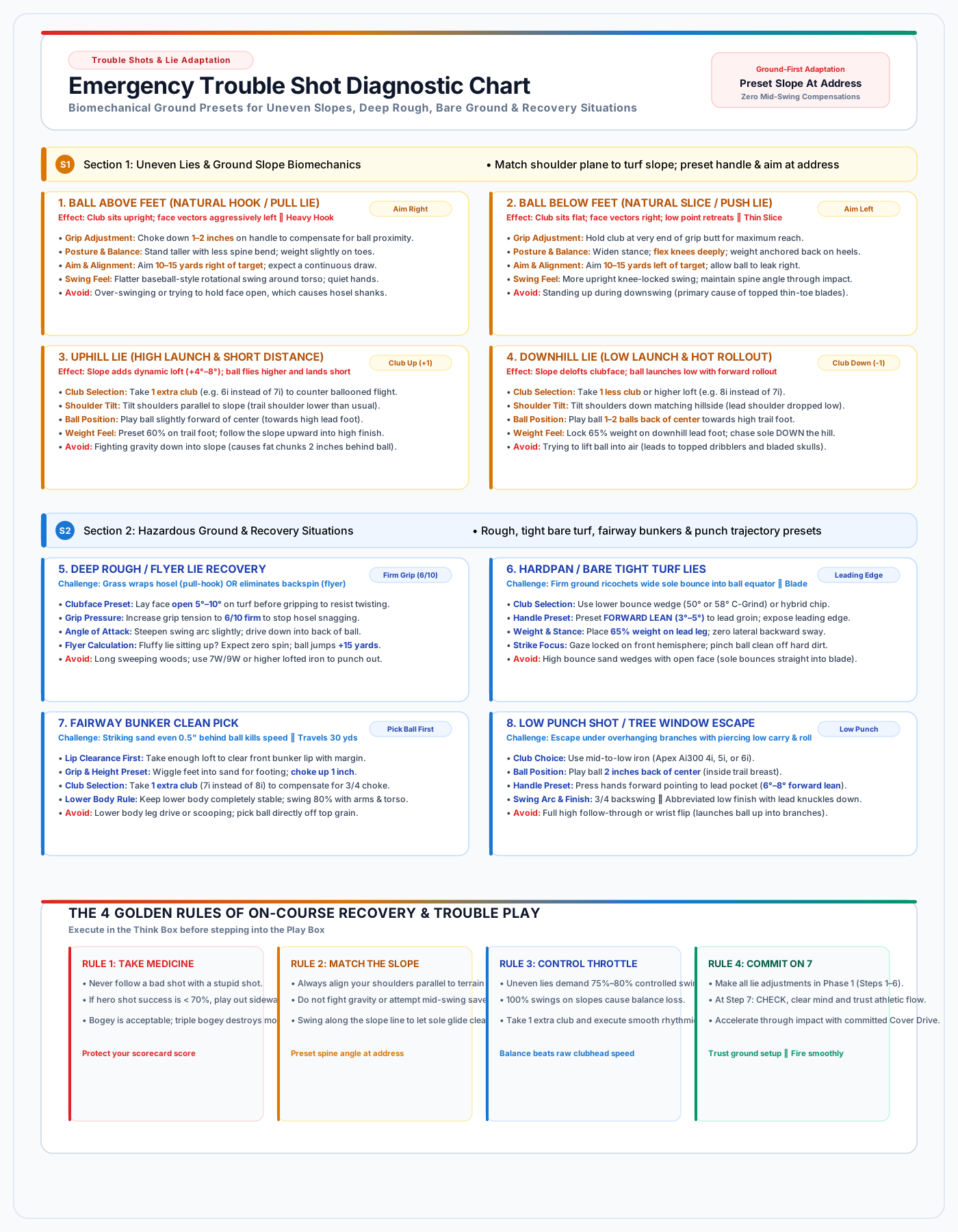
When facing severe slopes (ball above/below feet, uphill/downhill) or hazardous recovery lies (deep rough flyers, bare hardpan dirt, fairway bunkers, low punch escape), apply the Ground-First Slope Adaptation Blueprint:
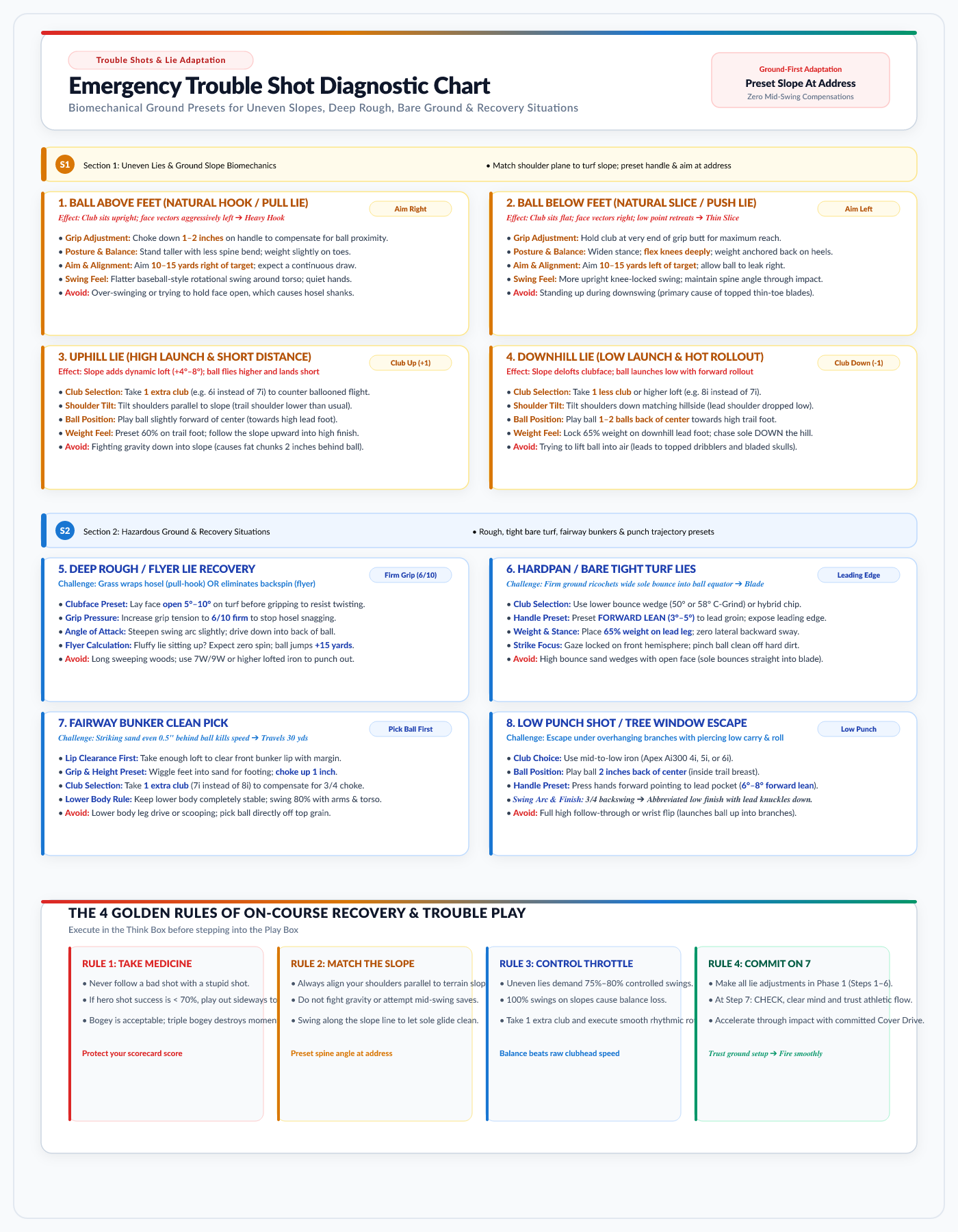
Figure 15.2: Emergency Trouble Shot Diagnostic Chart: Uneven Lies, Ground Slope Biomechanics & Recovery Strategies. View Vector SVG